All owners fund the service upgrade; opt-in owners still fund their own charger and stall work.
Strata pays for the Core. Owners pay when they opt in.
Mesh pricing is easiest to understand as two decisions: the building approves the common control layer once, then each owner buys their own equipment when they want an EV charger, heat pump, or other approved managed load.
Mesh Core: strata-paid, one-time project scope
The Core is common infrastructure. The installed quote depends on service access, CT placement, enclosure options, permits, and documentation needs.
Mesh Leaf: owner-paid when a stall is ready
Owners who want EV charging, heat-pump control, or another approved managed load arrange their own Leaf and installation work. Owners who are not ready do not have to buy owner-side equipment.
Mesh Core
- Main service monitoring controller for the shared electrical layer
- Required for each managed service entrance
- Can monitor up to 9 CT inputs across distribution points
- Coordinates downstream Mesh Leaf units over mesh radio
- Current transformers extra at $250 each
- NEMA 12 enclosure, 12 in x 10 in x 5 in
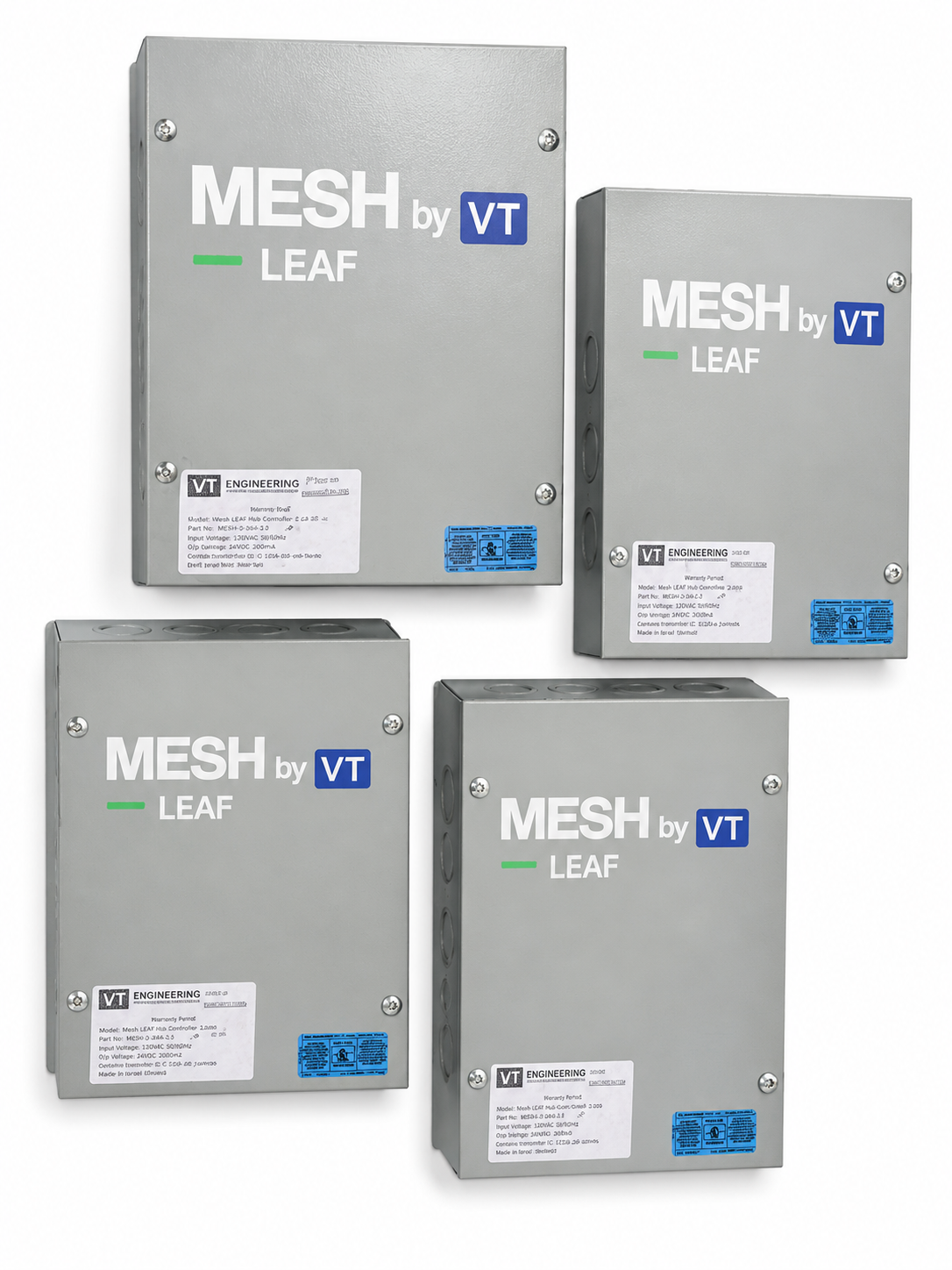
Mesh Leaf
- Owner-side Mesh hardware with one contactor output
- Controls up to 50A resistive load or 40A inductive load
- Two 200A split-core CTs included
- Can monitor single-phase or three-phase systems
- NEMA 12 enclosure, 10 in x 8 in x 4 in
- No subscription fees
Mesh Leaf Dual
- EV charger contactor plus low-voltage HVAC relay
- Controls EV charging and heat-pump or A/C call signals
- Two 200A split-core CTs included
- Can monitor single-phase or three-phase systems
- NEMA 12 enclosure, 10 in x 8 in x 4 in
- No subscription fees
Discount applies to combined Mesh Core and Mesh Leaf unit quantity on the same order.
- Prices are in CAD and subject to change.
- Shipping fees, taxes, installation labour, permits, and extra current transformers are not included in unit pricing.
- Custom options are available, including NEMA 3R enclosures and larger contactors.
- All equipment is CSA approved with SPE-1000, based on current product documentation.
Compare a service upgrade against VT Mesh.
A rough model for council: what all owners fund, how long it takes, and what changes when owners can opt in one at a time.
More cost factors ▾
All owners fund the shared Core layer; opt-in owners add Leaf hardware and EV charger installation when ready.
$37,100Includes estimated BC Hydro EV Ready infrastructure rebate.
Mesh turns a large, slow common-infrastructure decision into a smaller common control-layer decision.
The service-upgrade path asks owners to fund the whole electrical upgrade before the building has a practical managed-load rollout.
Give the champion a forwardable next step.
Use the current worksheet values to start a council email. VT Engineering can then prepare the packet, assessment scope, and vote-ready numbers so the resident is not left defending the technical case alone.
Replace the placeholders with the building name, next council date, and any real service-upgrade or electrician quote before forwarding.
What council will ask before approving.
No. Mesh control is built around the Core and Leaf radio layer. The site assessment still confirms radio path, controller locations, and commissioning settings before council relies on it.
The system is commissioned around configured electrical limits and managed-load behavior. The approval package should document what happens during loss of communication, outage recovery, and normal owner charging.
The strata approves the common Core scope. Participating owners buy their own Leaf, charger, and stall work when they opt in. Non-participating owners are not buying charger equipment.
Use a licensed electrician, site-specific assessment, CSA SPE-1000 product documentation, permit path, commissioning notes, and a clear council resolution reviewed by the property manager or strata lawyer.
A professional quote should explain the site variables.
The hardware price is only one part of the building decision. The assessment confirms what it will take to install safely and what owners need to understand before a vote.
Single-phase vs. three-phase, service size, CT access, and available enclosure space.
Distance from the electrical room to stalls, wall construction, and radio path.
How many townhouse or stall controllers are installed at launch versus added later.
AGM package, Technical Safety BC records, commissioning notes, and optional reporting.
Get the installed quote council can vote on.
Send the building address, unit or stall count, and where council is in the process. VT Engineering will tell you what to check next.
Review my building